 +86 13717134343



What is Auto Steering and How Does it Work
What is Auto Steering and How Does it Work

Auto Steering uses advanced technology to help drivers keep their vehicles on the right path. The system controls the steering wheel with the help of sensors, computers, and sometimes GPS. Many new vehicles now include auto steering, with between 62% and 72% of cars sold worldwide featuring this technology. Auto steering works as an assistance tool. Drivers remain responsible for the vehicle at all times.
Key Takeaways
-
Auto steering helps drivers keep their vehicles safely on the road by using sensors, control units, and steering mechanisms to assist with steering.
-
There are three main types of auto steering: lane keeping, lane centering, and hands-free assist, each offering different levels of driver support but never replacing the driver.
-
Auto steering improves safety by reducing crashes, increases comfort by lowering driver fatigue, and boosts fuel efficiency through advanced electric steering systems.
-
This technology is widely used in passenger cars and agricultural vehicles, helping drivers and farmers work more safely, accurately, and efficiently.
-
Drivers must always stay alert and ready to take control, as Auto Steering Systems assist but do not fully drive the vehicle.
Components
Sensors
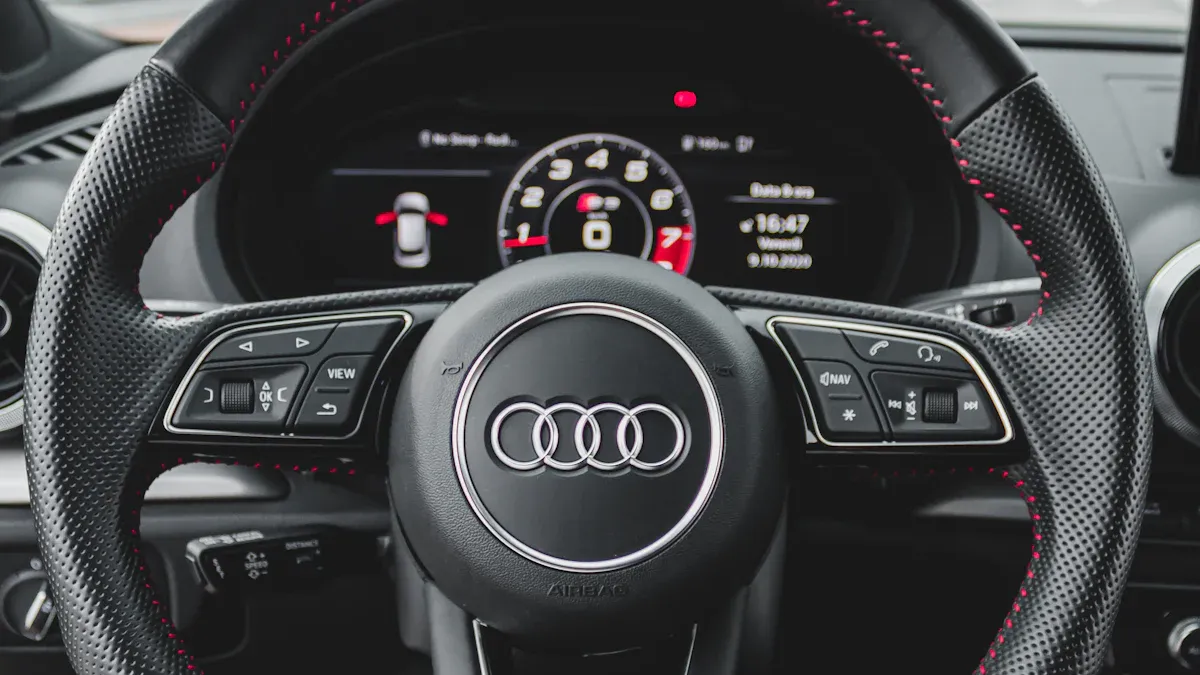
Sensors form the foundation of any auto steering system. These devices collect real-time information about the vehicle and its environment. Common sensors include torque sensors, steering angle sensors, cameras, radar, and lidar. Torque sensors measure the force applied to the steering wheel, while steering angle sensors track the wheel’s position and rotation. Both types often sit on the steering shaft and communicate with the vehicle’s control modules through a CAN bus. Calibration of these sensors is important after repairs or alignment to ensure accurate readings.
Cameras provide detailed images and help the system detect lane markings, vehicles, and obstacles. However, their accuracy drops in poor weather like rain or fog. Radar sensors use radio waves to measure distance and speed, working well in bad weather but sometimes missing small objects. Lidar sensors use lasers to create precise 3D maps of the surroundings, offering the highest accuracy but at a higher cost.
Note: Each sensor type has strengths and weaknesses. Auto steering systems often combine several sensor types to improve reliability and safety.
|
Sensor Type |
Operating Principle |
Key Characteristics |
Detection Range / Suitability |
|---|---|---|---|
|
Torque Sensors |
Measure twist/torque on steering shaft |
Contact and non-contact types; magnetic flux or resistance change |
N/A (force measurement, not range) |
|
Steering Angle Sensors (Potentiometers) |
Variable resistance changes with steering wheel rotation |
Simple, cost-effective, analog output |
N/A (angle measurement, not range) |
|
Hall Effect Sensors |
Voltage generated by magnetic field changes |
Durable, reliable, immune to dust and dirt |
N/A (angle measurement, not range) |
|
Optical Sensors |
Light interruption by rotating disc |
High precision and resolution |
Suitable for fine steering control; no explicit range given |
|
Inductive Sensors |
Electromagnetic induction from rotating gear |
Robust, suitable for harsh environments |
N/A (angle measurement, not range) |
Control Units
Control units act as the brain of the auto steering system. The main unit, called the Electronic Power Steering (EPS) control module, receives data from all sensors. It uses advanced software and algorithms to process this information. The control unit decides how much steering assistance the vehicle needs. It sends commands to the steering actuators, making real-time adjustments for safety and comfort.
The EPS control module monitors the system’s status and manages the electric motor that assists steering. It also compensates for road conditions, such as side winds or uneven surfaces, and alerts the driver if something goes wrong. Communication between the control unit and other parts happens through the Controller Area Network (CAN bus), which ensures fast and reliable data transfer.
The control unit’s ability to process sensor data quickly and accurately is essential for safe and responsive auto steering.
Steering Mechanisms
Steering mechanisms translate electronic signals from the control unit into physical movement of the wheels. The most common system in modern vehicles is rack and pinion, which converts the rotation of the steering wheel into the side-to-side motion needed to turn the wheels. Electric Power Steering (EPS) uses an electric motor to provide variable assistance, making steering easier and more efficient.
Other types of steering mechanisms include:
-
Worm and sector: Early mechanical system using gears.
-
Recirculating ball: Uses ball bearings for smoother movement, sometimes paired with hydraulic assist.
-
Hydraulic power steering: Uses fluid pressure to help turn the wheels, common since the 1950s.
-
Electric power steering (EPS): Uses electric motors and sensors, now the most popular due to energy savings and adaptability.
In advanced systems, actuators receive commands from the control unit and physically adjust the steering rack. Some vehicles use steer-by-wire technology, where electronic signals replace mechanical linkages. This setup allows for more precise and flexible steering control.
Safety features, such as feedback loops and redundancy, help prevent failures and ensure reliable operation even if one part of the system has a problem.
Auto steering systems rely on the seamless cooperation of sensors, control units, and steering mechanisms. Each component plays a unique role, but together they enable the vehicle to steer accurately and safely with minimal driver effort.
Auto Steering Types
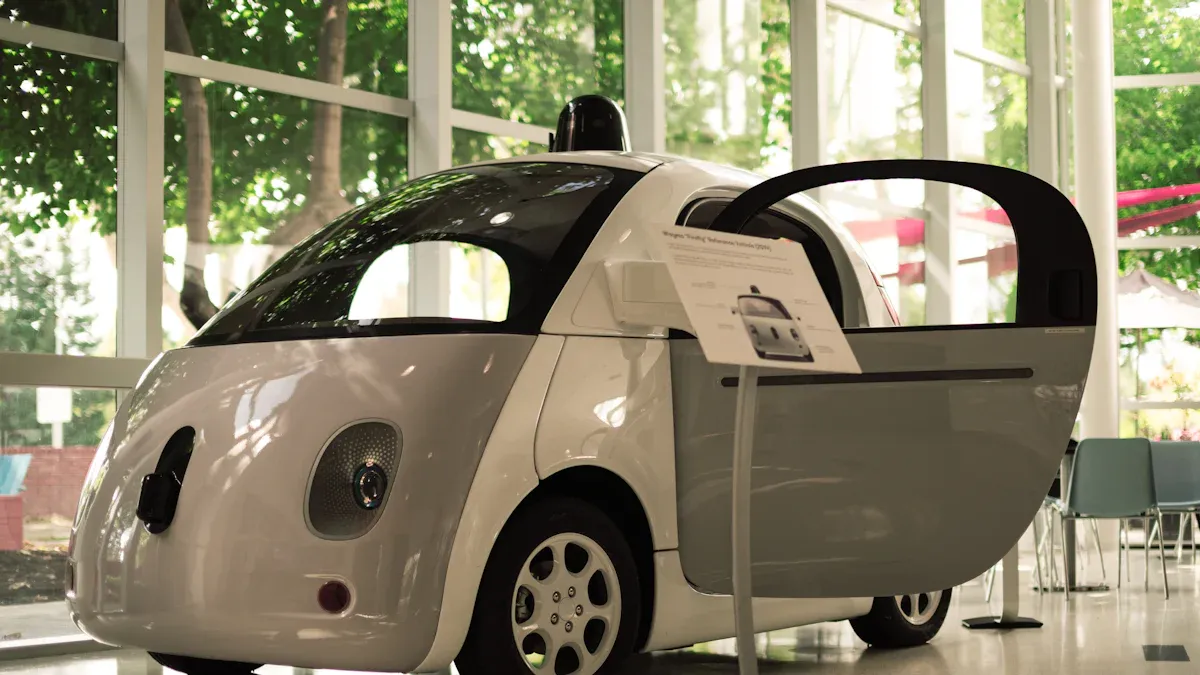
Auto steering systems come in several types. Each type offers a different level of assistance to the driver. These systems help keep vehicles safe and steady on the road, but they do not replace the driver. The main types include lane keeping, lane centering, and hands-free assist.
|
Feature |
Functionality |
Driver Involvement |
Example Systems / Notes |
|---|---|---|---|
|
Lane Keeping Assist (LKA) |
Provides corrective steering only when vehicle drifts out of lane; intervenes to bring car back |
Driver must keep hands on wheel; can override |
Common in many vehicles; acts only as a safety correction, not continuous steering |
|
Lane Centering Assist (LCA) |
Continuously makes steering adjustments to keep vehicle centered in lane, even if driver is steady |
Driver must remain attentive; can override |
Uses cameras to read lane markings; often requires adaptive cruise control; examples include Honda Sensing |
|
Hands-Free Assist Auto Steering |
Allows driver to remove hands from wheel under certain conditions (mapped highways, speed limits) |
Driver must remain alert and ready to take control |
Advanced Level 2 or ‘Level 2.5’ systems like GM’s Super Cruise, Ford’s BlueCruise; not fully autonomous |
Lane Keeping
Lane keeping assist helps prevent unintentional lane departures. The system monitors the vehicle’s position using cameras and sensors. When the car drifts toward the lane edge, the system gently steers it back. Lane keeping does not steer the car all the time. It only acts when the vehicle starts to leave the lane. Drivers must keep their hands on the wheel and stay alert.
Many vehicles now offer lane keeping as a feature. About half of all cars with automated steering include lane keeping assist. Of these, just over one-fifth make it a standard feature, while others offer it as an option. Lane keeping works best at higher speeds and on roads with clear lane markings. However, it may disengage in poor weather or if the lines are hard to see. Some drivers notice a “ping pong” effect, where the car bounces between lane lines because the system only reacts after drifting begins.
Lane keeping assist acts as a safety net. It does not replace the driver’s judgment or attention.
Lane Centering
Lane centering assist takes a more active role. This system continuously adjusts the steering to keep the vehicle centered between lane lines. It uses cameras to track the road and often works with adaptive cruise control. Lane centering provides smoother and more precise control than lane keeping. The system does not fight the driver’s inputs, so drivers can still steer as needed.
-
Lane centering only works when adaptive cruise control is on.
-
The system follows lane markings to keep the car centered.
-
It allows the driver to make small steering corrections without resistance.
-
Lane centering handles complex situations, such as wide exit lanes or rain, better than lane keeping.
-
The user interface often shows green lane markings when active.
Lane centering offers a more comfortable driving experience. It reduces the need for constant steering corrections. However, drivers must remain attentive and ready to take over at any time. The system may not work well if lane markings are faded or covered by snow.
Hands-Free Assist
Hands-free assist represents the most advanced type of auto steering available today. This system allows drivers to take their hands off the wheel under certain conditions, such as on mapped highways and within specific speed limits. The system combines lane centering with adaptive cruise control to manage both steering and speed.
Hands-free assist systems require drivers to stay alert and watch the road. The car monitors the driver’s attention using cameras and sensors. If the driver looks away or does not respond, the system issues warnings and may disengage. Examples of hands-free assist include GM’s Super Cruise, Ford’s BlueCruise, and BMW’s Highway Assistant. These systems are not fully autonomous. Drivers must be ready to take control at any moment.
⚠️ Regulatory standards, such as UN R171, require driver engagement for most driver assistance systems. These rules ensure that drivers remain responsible and attentive, even when using advanced features.
Hands-free assist works best on highways with clear lane markings and good weather. In rain, fog, or snow, sensor performance drops, and the system may not function reliably. Advanced sensor fusion and machine learning help improve performance, but challenges remain in adverse weather.
Key Points to Remember:
-
All three types—lane keeping, lane centering, and hands-free assist—are assistance features.
-
None of these systems provide full self-driving capability.
-
Drivers must always remain alert and ready to take control.
Benefits
Safety
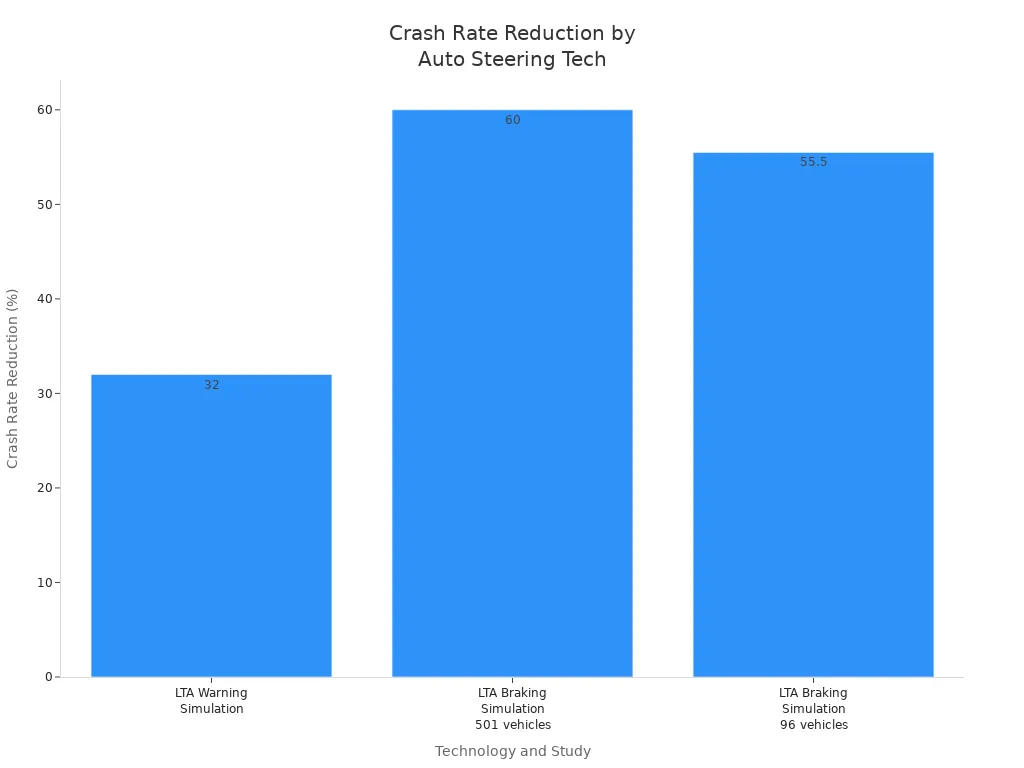
Auto steering systems help make driving safer. These systems use sensors and computers to keep vehicles in their lanes and avoid accidents. Studies show that lane keeping assistance and lane departure warning features can lower crash rates. For example, simulation studies found that lane keeping assistance with braking can reduce certain crash types by over 50%. Real-world data also shows fewer police-reported crashes when vehicles use lane departure warning systems.
|
Technology Type |
Study Method |
Sample Size |
Crash Type |
Reduction in Crash Rate |
Notes |
|---|---|---|---|---|---|
|
Lane Keeping Assistance (LTA) – Warning |
Simulation |
501 vehicles |
Left turn across path crashes |
32% reduction |
Warning effectiveness |
|
LTA – Braking |
Simulation |
501 vehicles |
Left turn across path crashes |
60% reduction |
Braking effectiveness |
|
LTA – Braking |
Simulation |
96 vehicles |
Left turn across path crashes |
55-56% reduction |
Multiple studies |
|
Lane Departure Warning (LDW) |
Real-world / Insurance claims |
N/A |
Lane departure crashes |
Significant reduction |
Supported by crash data |
Auto steering systems work best when drivers use turn signals and stay alert. The technology helps prevent accidents, but driver behavior still matters.
Comfort
Auto steering makes driving more comfortable, especially on long trips. Features like adaptive cruise control and lane keeping assist lower the driver’s workload. For example, Genesis vehicles use these systems to help drivers stay centered in their lanes and adjust speed automatically. This reduces stress and fatigue. Nissan’s ProPILOT Assist uses sensors and cameras to keep the car in the lane with little effort from the driver. The system gives gentle steering inputs, so drivers can relax while staying engaged. On highways, hands-free systems let drivers rest their hands, making long journeys less tiring.
Many drivers report feeling less tired and more alert after using auto steering features on long drives.
Efficiency
Auto steering systems can also improve fuel efficiency. Studies show that electric power steering systems use less energy than older hydraulic systems. For example, research found that electric power steering can improve fuel economy by about 1.7% during standard driving. These systems use energy only when needed, which saves fuel. Some auto steering features also help drivers follow the best route, reducing unnecessary stops and turns. This helps vehicles use less fuel and lowers emissions.
Small improvements in fuel efficiency can add up over time, saving money and helping the environment.
Applications
Passenger Vehicles
Auto steering plays a major role in modern passenger vehicles. Many cars now use this technology as part of Advanced Driver Assistance Systems (ADAS). These systems include lane keeping assist, adaptive cruise control, and automated parking. Drivers benefit from safer and more comfortable journeys because the car can help with steering, speed, and even parking.
Manufacturers such as JTEKT, Bosch, Nexteer, ZF, and Hyundai Mobis lead in developing intelligent steering systems. They use electric power steering (EPS) for better fuel efficiency and easier integration with electric vehicles. Some companies now offer steer-by-wire technology, which replaces mechanical parts with electronic controls. This change makes steering more responsive and allows for new car designs.
Many new vehicles combine auto steering with other features like emergency braking and driver monitoring. This integration helps the car react quickly to hazards and keeps drivers alert.
|
Examples Related to Auto Steering Integration |
Description |
|
|---|---|---|
|
Collision Interventions |
Automatic emergency steering, braking |
The car detects danger and can steer or brake to avoid accidents. |
|
Driving Control Assistance |
Lane keeping, lane centering, adaptive cruise control |
These features help keep the car in its lane and at a safe distance from other vehicles. |
|
Parking Assistance |
Active and remote parking |
The car can steer itself into parking spots, making parking easier for the driver. |
|
Other Assistance Systems |
Stability control, driver monitoring |
These systems support safe driving and help the driver stay focused. |
Agricultural Vehicles
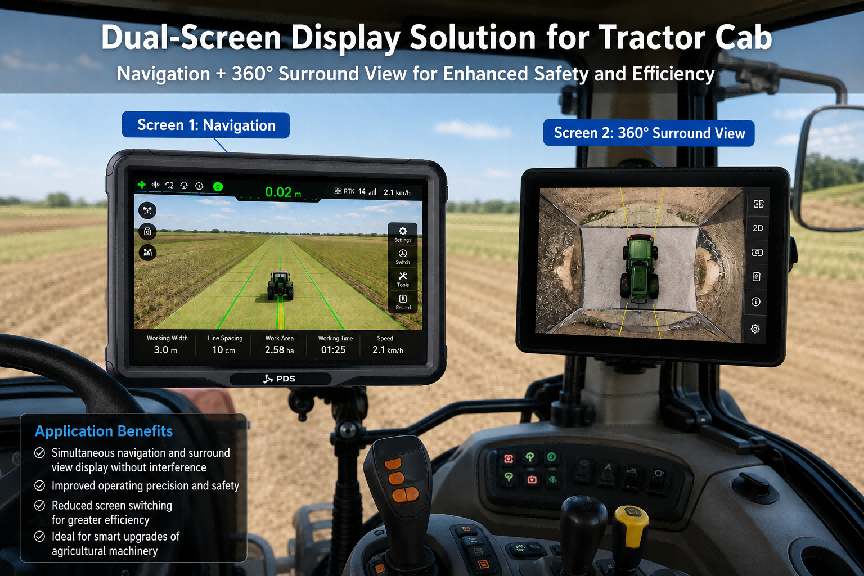
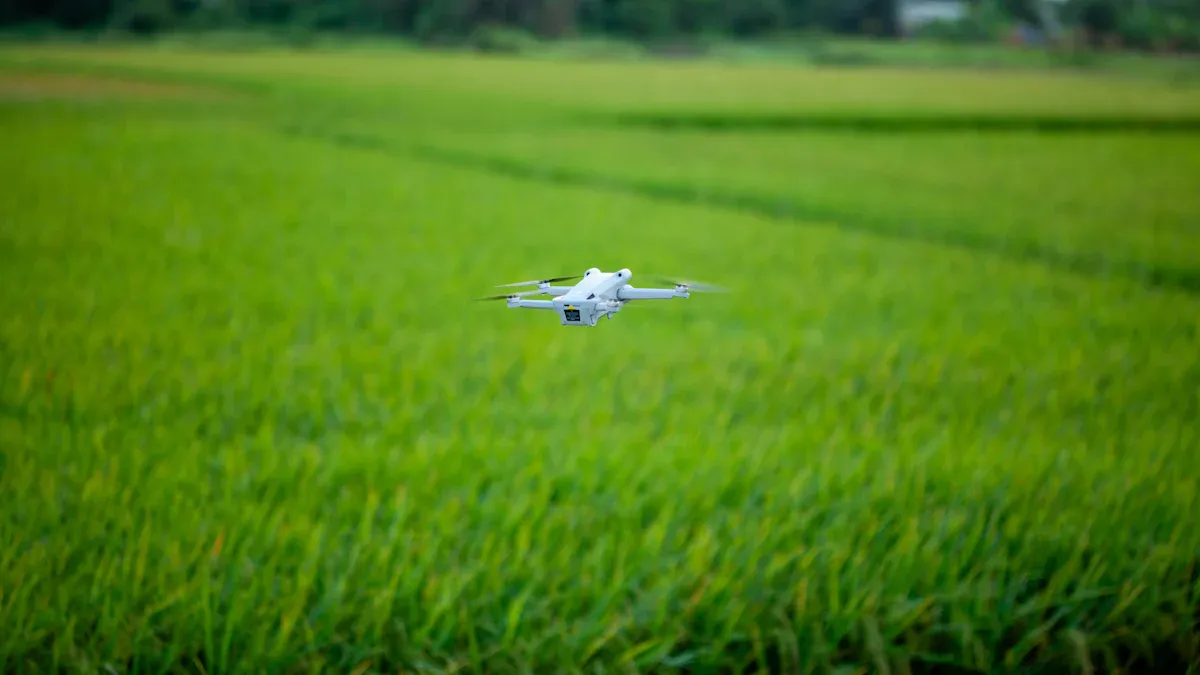
Farmers use auto steering to improve accuracy and efficiency in the field. Tractors, harvesters, and sprayers equipped with this technology follow precise paths using GPS and sensors. This reduces overlap and missed spots, saving seeds, fertilizer, and fuel. Operators experience less fatigue because the system handles most of the steering, even in low-visibility conditions.
-
Steer-ready tractors come with factory-installed auto steering components for higher precision.
-
The system uses GPS and wheel angle sensors to keep machinery on track.
-
Auto steering allows for exact turns and straight rows, which increases crop yields.
-
Safety features let operators switch between manual and automatic modes easily.
-
The technology supports Precision Farming by applying water and chemicals only where needed.
Auto steering in agriculture helps farmers work faster and more accurately, leading to better harvests and lower costs.
Auto steering uses sensors, control units, and advanced steering mechanisms to help vehicles stay on course. This technology improves safety, comfort, and efficiency for drivers and operators. Recent studies highlight several key trends:
-
Electric Power Steering and Steer-by-Wire systems boost energy savings and steering precision.
-
AI and smart materials make steering systems lighter, stronger, and more reliable.
-
Modern steering systems support better fuel economy and handling in many types of vehicles.
Drivers and professionals can expect auto steering to play a bigger role in daily travel and work.
FAQ
What happens if auto steering fails while driving?
The vehicle alerts the driver with sounds or dashboard messages. The driver must take control of the steering wheel. Auto steering systems always require the driver to stay alert and ready to act.
Can auto steering work in bad weather?
Auto steering may not work well in heavy rain, snow, or fog. Sensors can have trouble seeing lane lines or obstacles. Drivers should always watch the road and be ready to steer.
Does auto steering make a car self-driving?
No, auto steering only assists with steering tasks. The driver remains responsible for controlling the car. Full self-driving requires more advanced systems.
Is auto steering safe for new drivers?
-
Auto steering can help new drivers stay in their lanes.
-
It does not replace learning safe driving skills.
-
New drivers must always pay attention and keep their hands on the wheel.